Farm Trip or Bogota Coffee Workshop?
Short answer. A farm day is eight to fourteen hours and $81 to $180 and shows you the plant, the mill and the drying beds. A city workshop is two to three hours and $49 to $60 and shows you the roast, the brew and the cup. If you have the day, take the farm. If you have a morning, the workshop is not a consolation prize.
This is the real decision on a coffee trip to Bogota, and it is not a decision about money. It is about what you want to understand and how much of your trip you are prepared to spend understanding it.
The short answer
They teach different halves of the same subject. The farm owns everything from the seedbed to the drying bed; the city rooms own everything from the roaster to the cup. Neither substitutes for the other, and doing both across two days is the complete version for about $145.
Side by side
| Farm day | City workshop | |
|---|---|---|
| Time | 8 to 14 hours, door to door | 2 to 3 hours |
| Price | $81 to $180 per person | $49 to $60 per person |
| Leaves at | 6:30 to 9:00 | 10:00 |
| Transport | Included; hotel pickup on about half | None needed; you walk |
| What you see | Plant, picking, wet mill, drying beds | Roastery, brew methods, cupping |
| What you do | Pick, grind, brew, eat | Taste, score, compare |
| Food | Lunch on most farm days | Coffee only |
| Best for | Anyone with a full day free | Anyone with a morning |
The case for the farm day
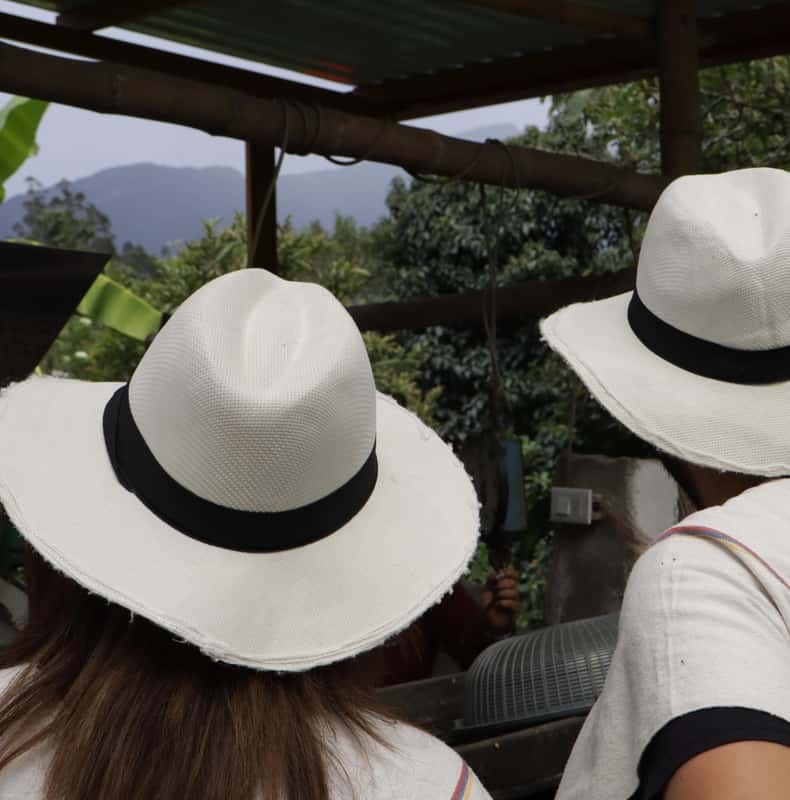
You cannot see a coffee plant in Bogota. That single fact does most of the arguing: the seedbed, the slope, the depulper, the fermentation tanks and the drying beds are all two hours away and none of them exists inside the city. Standing on planted ground with a basket is the thing people remember, and the good departures give you three to four hours of it.
The farms also feed you. Most full days include a cooked lunch and some include breakfast, and travellers rate the food as highly as the coffee. On one estate you plant a tree that stays. It is a day out in the countryside that happens to be about coffee, and that is a large part of why it works.
The case for the city workshop
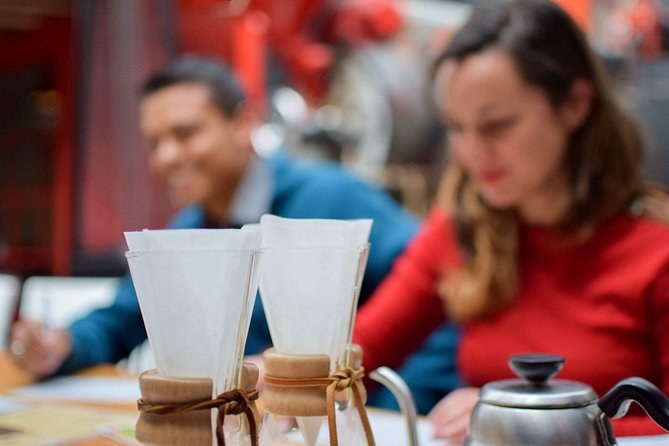
Two hours, under fifty dollars, three specialty rooms and a cupping sheet. You learn to name what you are tasting, which is the skill that survives the trip — and it is taught properly here in a way it is not on a farm, where the emphasis is the plant.
It also asks nothing of your schedule. No dawn alarm, no vehicle, no lost evening, and the walking is under a mile on flat pavement. If someone in your party has limited mobility or a short attention span, this is the version that works. What a tasting actually covers goes further.
Useful tip. If you are doing both, do the farm first. The workshop then puts names to decisions you watched being made, and the whole thing lands differently. The stages in order.
Doing both, and what it costs
About $145 and two half-committed days: a full day on a farm and one morning in Chapinero. It is the version a coffee-interested traveller should aim at, because each half answers what the other leaves open. Nothing else on offer here does more for the money.
Booking, and which one is easier to get
The workshop, comfortably. It runs on fixed mornings, needs no vehicle to fill, has no minimum party size and takes late bookings, which makes it the thing to reach for when plans move. Groups are capped at ten, so it does sell out, but a few days is usually enough.
Farm days want more notice. Two of them need a minimum of two confirmed travellers, several confirm within 48 hours rather than instantly, and the popular pickup departures fill first in high season. Three to five days ahead is the working answer, a week between June and August and over Christmas. Both refund in full at 24 hours, with one city walk as the single exception.
Verdict by traveller
- First trip, three days in the city: the farm, taking the departure with hotel pickup, and keep the evening free.
- Short on time: the workshop, no hesitation. Two hours is a real introduction, not a token one.
- Specialty drinker: the workshop first, then a long visit to a specialty estate rather than a general farm day.
- Travelling with children: the workshop, or a farm day with a short estate visit rather than a fourteen-hour cacao and coffee double.
- Not a coffee drinker, dragged along: the farm. It is a countryside day with lunch, and travellers who do not drink it say it worked anyway.
What the two of them cost in real time
The fare is the smaller half of the price. A farm day costs you the day: an alarm before six, three to five hours in a vehicle, and an evening you should not have planned anything for. A workshop costs you a morning and returns you to the city centre by lunchtime with the rest of the day intact.
On a five-day trip the farm is easy to absorb. On a two-day trip it is a third of everything you have, and that is the calculation worth doing before you look at the prices at all. The logistics side is here.
The one thing a farm day cannot teach you
Vocabulary. On a slope the emphasis is the plant, the weather and the work, and the cup at the end is usually brewed simply and drunk quickly. Nobody hands you a scoring sheet in a coffee field.
The workshops do exactly that: three rooms, a tasting at each, a flavour wheel and a sheet you fill in. It is the skill that comes home with you and the one that changes how you buy coffee afterwards. If you have already done a farm somewhere in the world, this is the half you are missing.
The one thing a workshop cannot teach you
Scale, and labour. Coffee is picked by hand, selectively, several passes through the same trees across a season, on ground steep enough to make the walking real. You do not understand what that means until you have filled a basket yourself and seen how little it weighs.
That is the fact that reframes the price of a bag, and it lives on a slope two hours from the city. No amount of tasting substitutes for it.
What neither of them is
Neither is the Coffee Triangle. That region is a domestic flight away and no departure from Bogota reaches it in a day. Both are Cundinamarca, which grows the same crop by the same methods with none of the fame — and, on the day you are actually in Bogota, all of the access.
Whichever way you go, a coffee farm tour costs less than a bad restaurant meal and teaches more. Check what the day involves and what is included before you book.
The complete version is both, across two days, for about $145. Everything that makes up that number is on Bogota Coffee Tours.
The two sides of this decision, side by side