Bogota Coffee Tours for First-Timers
Short answer. If you have three days in Bogota, a farm day is worth one of them — but only if you take the early departure and keep the evening free. If you have two, take the two-hour Chapinero workshop instead and spend the day you saved on the city.
The honest question a first-time visitor is really asking is not whether a coffee tour is good. It is whether nine hours of it is worth a third of the time they have. Here is the answer, with the shorter option attached rather than buried.
Is it worth a whole day?
Yes, if the crop interests you at all, and the reason is specific: you cannot see any of it in Bogota. The city has excellent coffee and no coffee plants. Everything from the seedbed to the drying bed is a two-hour drive away, and the day exists because of that geography rather than because somebody built an attraction.
No, if what you actually want is a good cup and an hour of context. That is two hours in Chapinero and about fifty dollars, and it leaves the rest of your day intact.
What a first-timer usually gets wrong
- Assuming it is nearby. The nearest farm is ninety minutes out; most are two hours or more, each way.
- Reading the title instead of the duration. One listing says half-day and describes nine hours in its own text.
- Booking the cheapest. The cheapest farm day excludes the estate's entry ticket, which you then pay at the gate.
- Planning an evening. The return leg is Bogota traffic. Two to three hours is normal and one traveller's ran to four.
- Expecting the Coffee Triangle. Different region, different flight.
How to spend three days, honestly
| Day | Do | Why this order |
|---|---|---|
| Day 1 | La Candelaria, the Gold Museum, Monserrate | Altitude takes a day to settle; walking the old town is the gentle version |
| Day 2 | A coffee farm day, leaving before 07:00 | It is the day that needs a whole day, and an early start beats the traffic |
| Day 3 | Usaquen or Paloquemao, then a two-hour Chapinero tasting | The tasting closes the loop the farm opened, and needs only a morning |
If you only have two days, drop the farm and keep the tasting. If you have four, add a second finca with a different process, because washed on one estate against specialty lots on another is a genuine contrast rather than a repeat. What else fits around a coffee day covers the rest.
Which departure suits a first trip
The one with hotel pickup and the farm's entry ticket included. It removes the two things most likely to go wrong on a first day out of an unfamiliar city — getting to a meeting point at dawn, and discovering a cost at the gate — and it adds a waterfall to a drive you were making anyway. It also carries the largest review volume of any coffee departure from the capital.
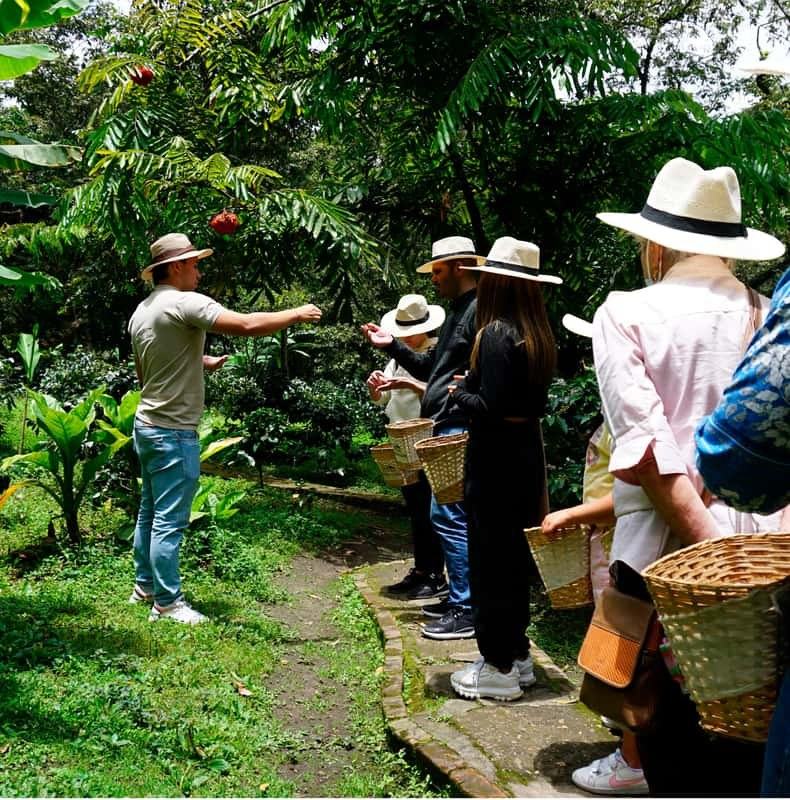
If you would rather do the work than be driven to it, the hands-on smallholding day puts a basket in your hand, feeds you twice and sends you home with a bag of coffee. It meets in La Candelaria rather than collecting you, which is the trade.
Useful tip. Book a pickup departure if you are staying north of Calle 100. A 06:30 taxi across Bogota in the dark is the worst possible start to a good day. How the pickups work.
What to do if the tour is cancelled
It happens two ways and both end in a refund. A departure with a two-traveller minimum that does not fill will be cancelled and refunded in full, and two departures to one estate west of the city may be moved for weather, again with a full refund. Neither leaves you out of pocket, but both can leave you with an empty day.
The fallback is the city. Workshops run on fixed mornings, take late bookings and need no vehicle, so a cancelled farm day converts into a tasting with a phone call. Keeping that in your back pocket is the difference between a lost day and a rearranged one.
Altitude, and the day you arrive
Bogota is at 2,640 metres and most people feel it a little for the first day: shorter breath on stairs, a duller headache, less appetite. A farm day is a descent, so it is actually easier on you than the city is — but the early start is not, and one traveller who did it straight off a red-eye says it worked and that they would not necessarily do it again.
Give yourself the first night. Then go down the hill.
What you actually come back with
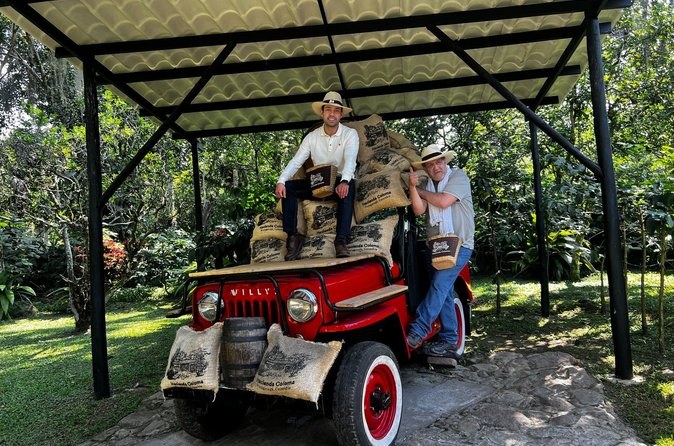
A working idea of how the crop gets to a cup, which is more than most people have. Usually a bag of beans. Sometimes a photograph of yourself holding a basket, and on one farm a tree that stays. Travellers who do not drink coffee say the day was worth it anyway, which is as good a test of a tour as exists.
Where to stay so the mornings work
Two districts do most of the work on a coffee trip. La Candelaria is the old town: colonial streets, the museums, and the meeting point for the hands-on farm day. Chapinero is where the specialty coffee is, where every city workshop runs, and where you can walk to a good cup at seven in the morning.
Staying in either puts you inside walking distance of a meeting point and cuts the dawn taxi out of the day. Staying north of Calle 100 does not, and that is the moment a pickup departure earns its price. Whichever you pick, tell the operator the address exactly as it appears — several ask for it at booking rather than on the day.
The money side, in one place
A farm day with transport is $81 to $130 for the shared versions, and the useful comparison is not the fare but what sits inside it. Two exclude food. One excludes the estate's own entry ticket, which you then pay on arrival. One includes lunch only if you take the private option.
Add roughly $10 to $20 for lunch where it is not included, whatever you spend on beans, and a tip if you want to leave one — tips are excluded everywhere and expected nowhere. Carry pesos in cash, because cards are unreliable out in the hills. The full price breakdown is here.
If you only remember one thing
Compare hours on the estate, not total tour length. Two departures can both say eight hours and give you two hours and four hours on the farm respectively, and both descriptions are accurate. That single number is the difference between a drive with a coffee at the end and a day you talk about afterwards.
A coffee tours in Bogota is worth a day of a short trip. Just take the early one, and check what is included before you pay.
Two days or five, the choice is the same one: a whole day out, or two hours in the city. Both are compared on Bogota Coffee Tours.
Departures that suit a first trip