Every Stage of a Bogota Coffee Visit
Short answer. A farm visit walks you along one road: seedbed, cherry, wet mill, drying bed, roaster, cup. What differs between departures is how many hours you get for it — two on the shortest, eight on the longest — and how much of it you do with your own hands.
Every finca near Bogota sells the same journey and cuts it to a different length. Knowing the stages before you go turns a walk round a farm into something you can follow, and it tells you which departure is worth the extra hours.
The nursery, where three years begins
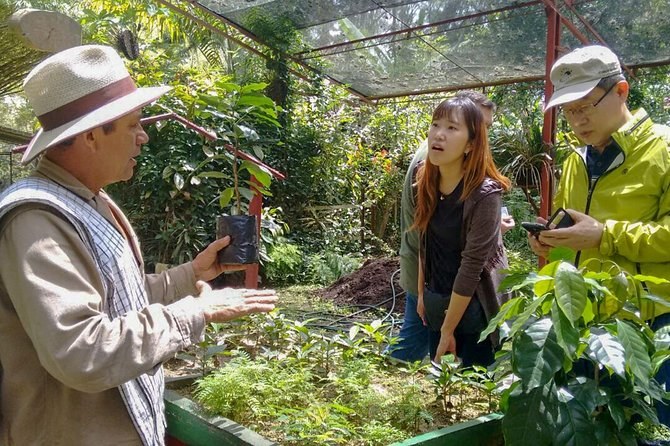
Coffee starts in a shaded seedbed, in trays, looking like nothing. A seedling goes into the slope and takes about three years to bear a useful crop — a fact one traveller said stayed with him longer than anything else that day. On the hands-on farm you may plant one yourself, and it stays there after you leave.
Time given to it: ten minutes on most farms, half an hour on the estates that propagate their own varieties.
The slope, and learning to read a cherry
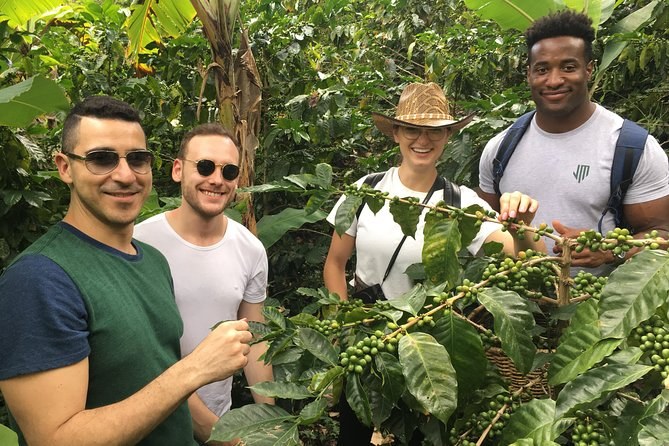
Green, then yellow, then red. Picking is done by hand and selectively, several passes through the same trees across a season, and picking green is the fastest way to ruin a lot. This is the part visitors actually do: a basket on the hip, an hour on planted ground, and someone checking what you drop into it.
One farm has arranged things so that cherry picking is available in every month of the year and says so in its own inclusions. Everywhere else it depends on the calendar — the harvest month by month tells you which window you are landing in.
The wet mill, in the hour after picking
Skin and flesh come off within hours, in a depulper that looks agricultural and sounds worse. Then the beans sit in fermentation tanks, still slick, while microbes strip the mucilage. Hours matter here more than anywhere else on the farm: this is where a large part of the flavour is decided, and it is the stage most visitors have never heard of.
Then washing, which is why so many Colombian bags say "washed". The beans come out clean and pale and go straight to the drying beds.
The drying beds, and why rain is the enemy here
Patios or raised beds, raked by hand, a week or so in good weather. This is the one stage where rain is a genuine problem rather than an inconvenience, which is why the good estates cover their beds. If you are visiting in the wet, this is the part of the farm to ask about.
Milling, and the point most farms sell at
A papery parchment husk comes off to leave green coffee. Most Colombian farms sell here and never see what happens next. The estates that take visitors usually go further, which is the whole reason a farm visit can end in a cup.
The roaster, where the flavour you recognise is built
Minutes rather than months, and the difference between a good bean and a good cup. Some farms roast on site; others send green coffee to Bogota and bring the roast back. If the roast is what interests you most, the city rooms do it better — the Chapinero workshops are built around exactly this stage.
The cup, and the sheet in front of it
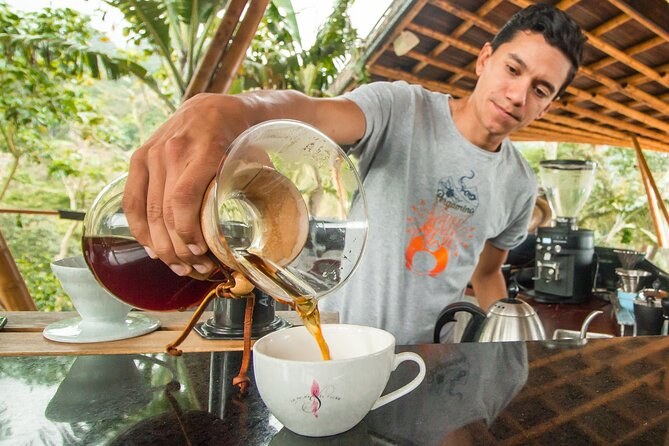
Olleta on a stove, French press, pour-over or espresso, depending where you are standing. On two of the city workshops you also get a cupping sheet and a pen and are expected to use both, which is the difference between drinking coffee and reading it.
How many hours each finca gives you
| Estate | Hours on site | How far along the road you get |
|---|---|---|
| A finca near Fusagasuga | 2 hours | Slope, mill, a cup |
| Hacienda Coloma | 2 to 4 hours | The full sequence, unhurried at four |
| A women-led smallholding | 3 to 5 hours | Picking, grinding and brewing yourself |
| Las Mesitas de Santa Ines | 5 hours | The estate as a place, plus the process |
| La Palma y El Tucan | 7 to 8 hours | Laboratory, cupping and a barista class |
Worth knowing. Two hours is a walk, a mill and a cup. Four is the whole sequence without hurrying. Seven or eight adds cupping and a barista class, and only two departures offer it. Which estate is which.
Washed, natural or honey
The stages between picking and drying can be run three ways, and it is the biggest single choice a farm makes. Washed is the Colombian default and tastes cleaner and brighter. Natural dries the bean inside the whole fruit and comes out heavier and sweeter. Honey sits between them. Your guide will name the method; now the name means something.
Varieties you will hear named
Castillo and Colombia are the two bred for resistance to leaf rust, and between them they cover most of the country. Caturra is the older one: sweeter, more fragile, still planted on smaller farms by growers who prefer the cup. Beyond those sit the varietals a specialty estate plants for flavour rather than yield, and a guide will tell you which rows are which if you ask.
The word you will hear most often is "specialty", and it is a score rather than a mood: coffee is cupped and graded, and eighty points on the hundred-point scale is the line. Two of the estates reachable from Bogota work at that end on purpose.
Three things most visitors walk straight past
- The shade trees. Coffee under canopy ripens more slowly, which concentrates what ends up in the cup. Look up and see what is growing over the rows.
- The reject pile beside the depulper. Floaters, unripes and damaged beans, pulled out before fermentation. It tells you more about a farm's standards than the tasting does.
- The moisture meter on the drying beds. Coffee comes off at around eleven per cent, and getting it wrong spoils a whole lot after all the work.
Photographing a working farm
Mid-morning, once the cloud has lifted off the ridges and before the afternoon builds. The cherries photograph best on the tree rather than in the hand, the drying beds want a high angle, and the wet mill is usually dark. If you only take one picture, take the row of trees with the hill behind it, because that is the thing you cannot get anywhere in the city. There are more of them in the gallery.
What to ask while you are standing there
- Which variety is this row — Castillo, Colombia, Caturra, or something planted for flavour?
- How long does the fermentation run here, and what changes if you leave it longer?
- Are the drying beds covered, and what happens in a wet November?
- Where does this coffee go after milling — roasted here, or sold green?
- What altitude are we standing at?
A handful of questions like those turns a tour into a conversation, and guides on these farms answer them properly. A coffee plantation tour is worth the day for that alone.
If the process is the thing you came for, choose the longest visit you can afford rather than the cheapest fare. The full seed-to-cup explainer goes deeper on each stage, and what a day feels like covers the rest of it.
Pick the estate by the hours it gives you, then the departure that reaches it. Both are set out on Bogota Coffee Tours.
Departures that walk the whole road